


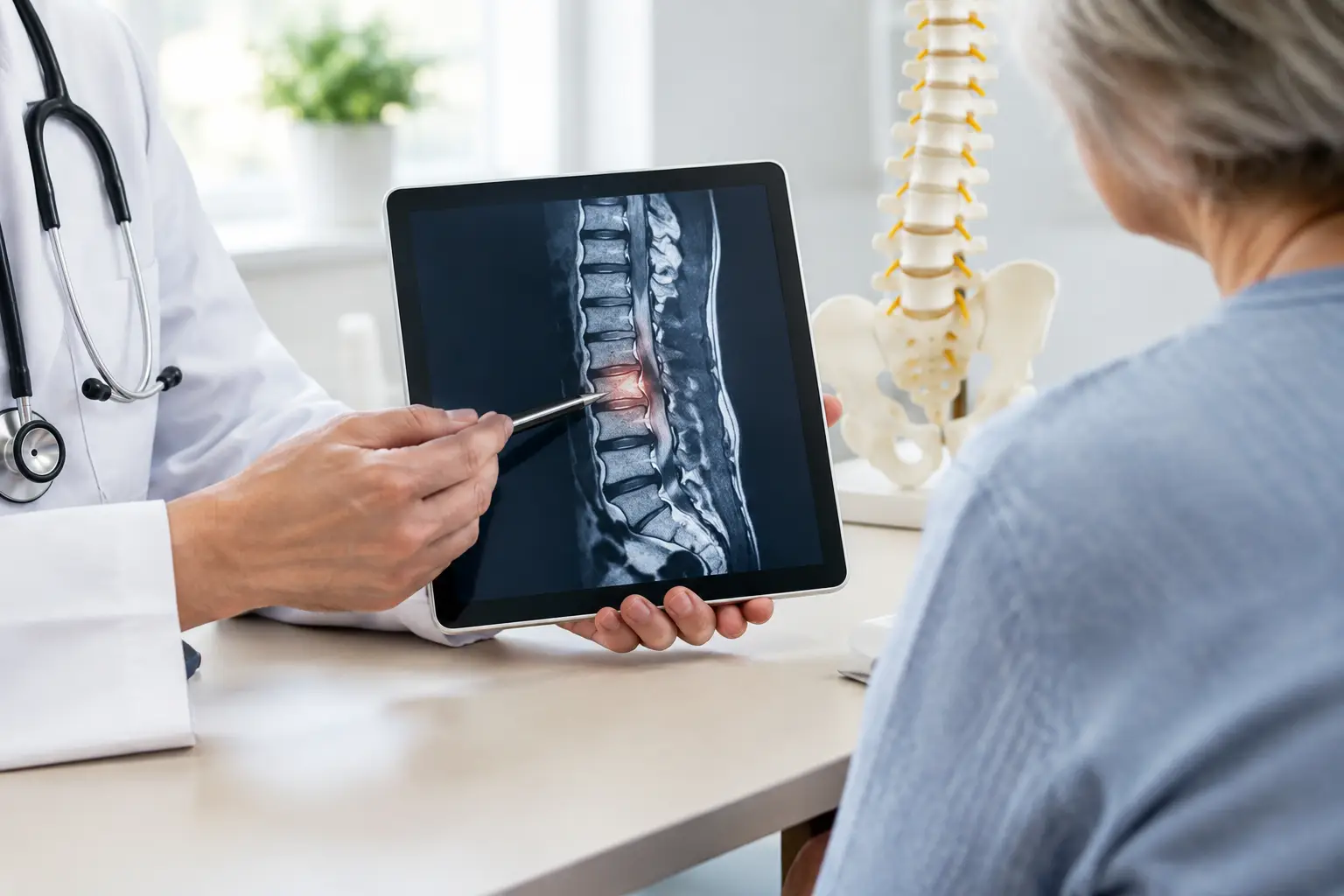
A vertebral compression fracture can begin with pain that seems out of proportion to the event that caused it – or with no obvious injury at all. For patients asking what causes vertebral compression fractures, the answer often starts with weakened bone, but a careful evaluation must also rule out trauma, cancer, infection, and other conditions that can affect spinal stability.
A compression fracture occurs when part or all of a vertebral body, the block-shaped bone at the front of the spine, collapses under pressure. The fracture may cause sudden, sharp mid-back or low-back pain, but it can also create a gradual ache, loss of height, or a forward-curving posture. Identifying the underlying cause matters because the right treatment depends on more than an X-ray showing a collapsed vertebra.
What Causes Vertebral Compression Fractures Most Often?
Osteoporosis is the most common cause. This condition reduces bone density and weakens the internal structure of bone. As a result, a vertebra may fracture during an ordinary activity such as bending to pick up an item, lifting a light bag, getting out of a car, or coughing forcefully. In some cases, patients cannot identify a single triggering event.
Osteoporosis becomes more common with age, particularly after menopause, but it is not limited to older women. Men can develop osteoporosis as well, often without knowing their bone strength has declined. A prior low-impact fracture is a meaningful warning sign that future fractures may occur without treatment for the underlying bone loss.
The thoracic spine, or mid-back, and the upper lumbar spine are frequent locations for osteoporotic compression fractures. Pain can be intense at first and may worsen with standing, walking, bending, or changing position. Rest may ease symptoms, although persistent pain should not be dismissed simply because it improves when lying down.
Trauma Can Fracture a Healthy Spine
A high-energy injury can cause a compression fracture even when bone density is normal. Motor vehicle collisions, falls from a height, sports impacts, and workplace injuries can force the spine to compress suddenly. These fractures may be more complex than those caused by osteoporosis, particularly if the injury affects the back portion of the vertebra or narrows the spinal canal.
Not every traumatic fracture requires surgery. Stability, alignment, pain level, neurologic findings, and the patient’s ability to function all influence the treatment plan. However, traumatic spinal pain deserves timely specialist assessment, especially after a significant accident. Advanced imaging may be needed to determine whether the fracture is stable and whether nearby nerves or the spinal cord are at risk.
Conditions That Weaken Bone or Affect the Vertebra
Several medical issues can increase the likelihood of a compression fracture. Long-term corticosteroid use, such as prednisone, is a well-recognized risk factor because it can accelerate bone loss. Certain endocrine disorders, low vitamin D, low calcium intake, chronic kidney or liver disease, inflammatory conditions, and reduced mobility can also contribute to poor bone quality.
Cancer is another critical consideration. Some cancers can spread to the spine and weaken a vertebra from within, making it vulnerable to collapse. Multiple myeloma, breast cancer, prostate cancer, lung cancer, and kidney cancer are among the conditions that may involve spinal bone. A fracture caused by cancer is not always distinguishable by symptoms alone, which is why imaging and medical history are essential.
Spinal infection is less common, but it can damage bone and disc tissue and lead to instability or vertebral collapse. Fever is not always present. New severe back pain in a person with a recent infection, immune suppression, intravenous drug use, uncontrolled diabetes, or a history of bloodstream infection requires prompt medical attention.
Risk Factors That Often Go Unrecognized
Compression fractures can develop after years of gradual bone loss. Many patients have risk factors but have never had a bone-density evaluation or discussed fracture prevention with their physician. Risk rises with older age, a family history of osteoporosis, low body weight, smoking, heavy alcohol use, poor nutrition, and limited weight-bearing activity.
Hormonal changes also matter. Women lose bone more rapidly after menopause because estrogen levels decline. Men with low testosterone may face increased osteoporosis risk. Certain medications, including some seizure medications and treatments that alter hormone levels, can affect bone strength over time.
A previous vertebral compression fracture deserves particular attention. Once one vertebra has fractured, changes in posture and spinal mechanics can place added stress on adjacent levels. This does not mean another fracture is inevitable, but it does make bone health assessment and close follow-up more important.
Symptoms That Need a Timely Spine Evaluation
Acute pain from a compression fracture is often localized to the mid-back or low back and may begin after a minor movement or a fall. The area can feel tender, and pain may increase when the spine is loaded. Over time, multiple fractures may lead to height loss, a stooped posture, fatigue with standing, and reduced breathing capacity due to changes in chest and spinal alignment.
Some symptoms require urgent evaluation. Seek immediate medical care for back pain accompanied by new leg weakness, numbness, difficulty walking, loss of bowel or bladder control, saddle numbness, fever, or unexplained weight loss. These symptoms can indicate nerve compression, spinal cord involvement, infection, cancer, or another condition that should not wait.
Pain after a collision or fall should also be evaluated promptly if it is severe, persistent, or associated with neurologic symptoms. Continuing normal activity on an unstable fracture can worsen deformity or increase the risk of complications.
How Specialists Determine the Cause
A thorough evaluation begins with the details: when pain started, whether there was an injury, prior fractures, medication use, cancer history, recent illness, and changes in balance or mobility. The physical examination helps identify focal tenderness, posture changes, neurologic deficits, and signs that pain may come from a different spinal condition.
X-rays can show vertebral height loss and deformity, but they do not always establish whether a fracture is new or old. MRI is particularly useful for identifying bone marrow swelling associated with an acute fracture and for assessing nerves, the spinal cord, discs, infection, or tumor. CT imaging can provide a detailed view of fracture anatomy and bony stability.
The diagnostic process may also include bone-density testing and blood work, depending on the clinical picture. This is especially important when a fracture occurs with little or no trauma, in a younger patient, or in someone with symptoms that raise concern for an underlying disease.
Treatment Depends on the Fracture and the Patient
Many stable compression fractures improve with a focused nonoperative plan that may include pain control, activity modification, a brace when appropriate, and treatment for osteoporosis or other bone-health concerns. The goal is to control pain while supporting safe movement and avoiding prolonged inactivity, which can further weaken bone and reduce conditioning.
When pain remains severe despite appropriate conservative care, or when the fracture is clearly responsible for substantial functional decline, kyphoplasty may be considered. This minimally invasive procedure can stabilize a painful fractured vertebra by creating space within the bone and placing bone cement under imaging guidance. It is not right for every fracture, particularly when the fracture is old, symptoms come from another source, or there is significant instability requiring a different approach.
Fractures related to trauma, tumor, infection, or neurologic compression may require more extensive treatment. That can include stabilization surgery, tumor-directed care, antibiotics, or coordinated treatment with oncology, endocrinology, primary care, and rehabilitation specialists. Clear diagnosis comes first because treating the collapse without addressing its cause can leave the larger problem unresolved.
At Total Spine & Brain Institute, a compression-fracture evaluation is centered on determining why the vertebra failed, whether the fracture is stable, and which treatment offers the safest path back to function. New or worsening spinal pain is worth taking seriously. A timely specialist assessment can clarify the diagnosis, protect neurologic function, and help prevent the next fracture from becoming the one that changes daily life.
